
The Science Behind PEMF Therapy
How Cells Create and Use Energy
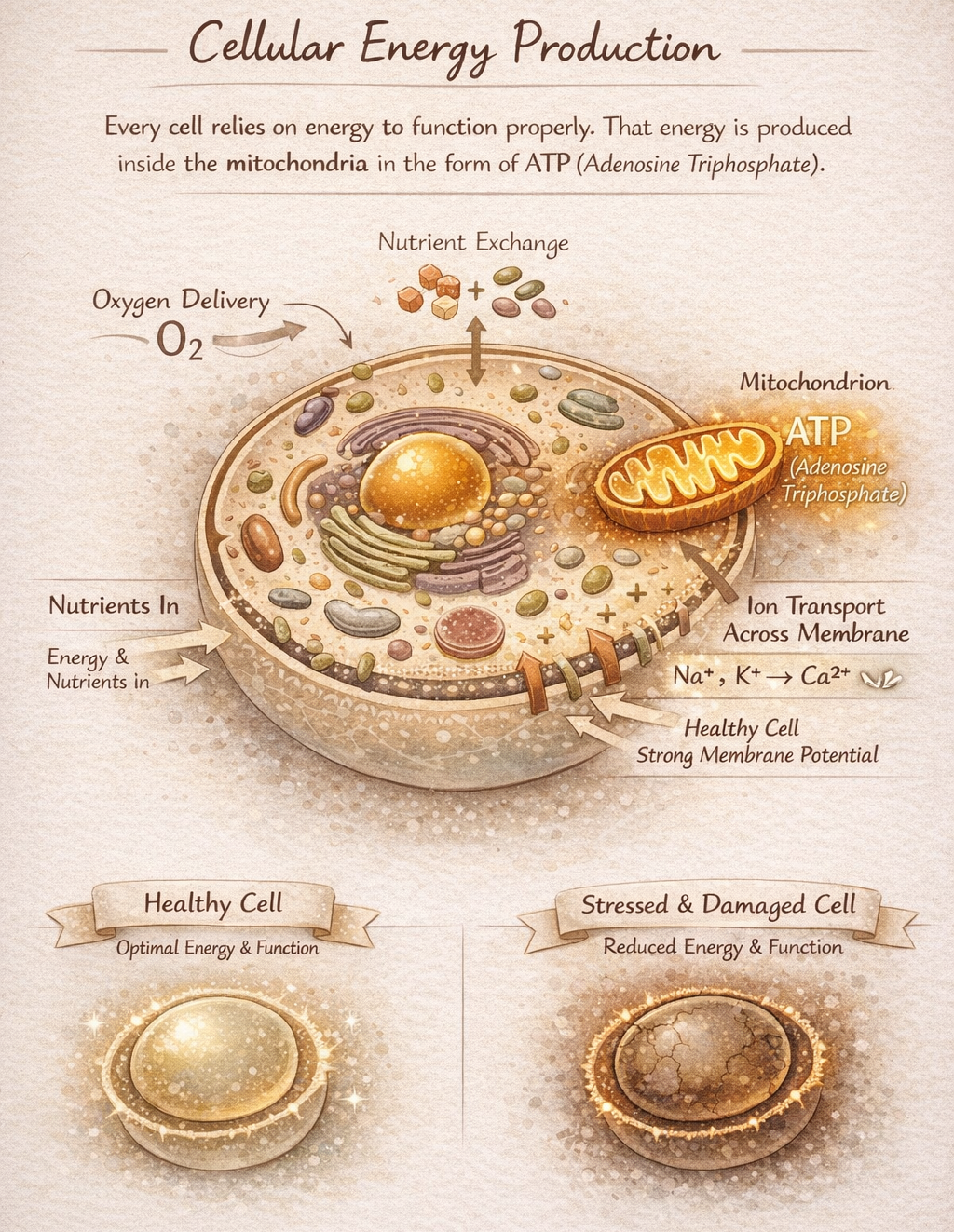
Every cell in the body relies on energy to function properly. That energy is produced inside the mitochondria in the form of ATP (adenosine triphosphate).
ATP production depends on:
Adequate oxygen delivery
Proper nutrient exchange
Efficient movement of ions across cell membranes
When a horse experiences physical stress, injury, inflammation, or compromised circulation, this process can become less efficient. The chemical and electrical balance surrounding the cell may be disrupted, making it harder for cells to communicate, recover, and produce energy efficiently.
The Role of Electrical Charge in Cellular Health
Healthy cells maintain a strong electrical membrane potential. This electrical charge allows nutrients to enter the cell and waste products to exit, supporting normal metabolism and tissue function.
When inflammation is present, the chemical balance around the cell becomes altered. This disruption can interfere with membrane potential, slowing cellular communication and recovery. Over time, affected tissues may fatigue more easily, heal more slowly, or become more susceptible to soreness and dysfunction.
How PEMF Influences Cells
PEMF therapy delivers low-frequency electromagnetic pulses to tissues. These pulses interact with the electrical environment of the cell and help normalize the chemical balance surrounding it, creating conditions that allow the body to heal itself more efficiently.
PEMF may help support:
Improved ion exchange across cell membranes
Enhanced oxygen utilization
Increased cellular communication
By supporting cellular electrical balance, PEMF helps cells function more efficiently rather than forcing a response.
Circulation, Oxygen, and Tissue Recovery
PEMF has been shown to support circulation and microcirculation. Improved blood flow allows oxygen and nutrients to reach tissues more effectively while also supporting the removal of metabolic waste.
This is particularly beneficial for muscles, joints, and connective tissues that experience repetitive stress from training, competition, or daily workload.
Inflammation and Tissue Stress
Inflammation is a natural and necessary response to stress or injury. However, prolonged or poorly regulated inflammation can interfere with movement, comfort, and recovery.
PEMF supports the body’s natural regulatory processes by influencing cellular signaling involved in inflammation and repair. By helping normalize the chemical environment around the cell, PEMF supports a healthier healing response rather than simply masking symptoms.
Why PEMF Is Used Alongside Bodywork
PEMF does not replace hands-on bodywork or veterinary care. Instead, it complements massage and other manual techniques by working at the cellular level, while hands-on therapies address muscle tension, joint mobility, and fascial restrictions.
Used together, these approaches support both the structural and cellular components of movement and recovery.
PEMF in Equine Wellness and Performance
In horses, PEMF is commonly used as supportive care for conditions such as:
Muscle soreness or tightness
Joint stiffness and comfort, including arthritic changes
Soft tissue strain
Post-work or post-competition recovery
Circulatory or lymphatic support
General tension related to workload or aging
PEMF is not a replacement for veterinary diagnosis or treatment, but it can be a valuable part of a comprehensive wellness and maintenance program when used appropriately.
Each session is tailored to the individual horse, taking into account age, workload, history, and comfort level.
